What this is
Every great roguelite does the same handful of jobs with its BUMs (build upgrade moments). They just give them different names. This doc lines up 4 games side by side so the jobs are easy to see, then turns them into a checklist. Do with it as you please, I’ll be using it to design prototypes.
The short version: you don’t need lots of different BUM types. You need each one to do its job & you need the jobs covered.
What’s a “job”?
A job is what a BUM is for. The purpose it serves, whatever the game calls it.
For every BUM, ask a question “What’s this doing for me?”
The answer to that question is its job.
Balatro – A joker: “Diamonds give +3 mult” What’s it doing for me? Sitting there all run, changing how things work.
Halls of Torment – A trait: “+10% attack speed” What’s it doing for me? Sitting there all run, changing how things work.
He is Coming – An item: A ring that heals you each turn. What’s it doing for me? Sitting there all run, changing how things work.
Three different names: Joker, Trait, Item. Same answer every time. That shared answer is the job.
Another example:
Balatro: Boss Blind. Halls of Torment: The hall boss. He is Coming: The boss at night.
What’s it doing for me? Testing if my build is good enough.
The four games
I’m going to use 4 games that I’ve played extensively.
If the same job shows up across cards, a bullet heaven, a tradRL and an autobattler, then it’s a real pattern.
One we should be taking note of.
4 games, 4 genres
| Game | Genre | Why it’s in |
|---|---|---|
| Balatro | Poker deckbuilder | The deep one. Loads of BUM types, all plugged into one simple score (Chips x Mult) |
| Halls of Torment | Bullet heaven | The steady drip. Decisions keep arriving the whole run, so a 20 minute run feels short |
| Path of Achra | Trad roguelike | The foundations one. The run is decided by what you pick before it starts |
| He Is Coming | Autobattler | The closest to Raid Boss. You build, the fight plays itself, a known boss is coming |
The jobs, side by side
Job by job
| Job | Balatro | Halls of Torment | Path of Achra | He Is Coming |
|---|---|---|---|---|
| Foundationwhat the run is before it starts | Deck choice and stake | Hero choice, plus gear you bring in from the stash | Culture, class and religion, 1,000+ combos | Light: always the knight, unlocks widen the item pool |
| Enginethe thing doing the work | The poker hands you play | Main attack plus up to 6 abilities | Weapon plus powers bought with skill points | Weapon plus four stats: health, attack, armour, speed |
| Rule benderspassive stuff that changes how things work | Jokers, 5 slots | Traits on level up, 8 gear slots | Gear passives, religion bonuses | Items in limited slots, starting at 4 |
| Level upsmake one thing stronger | Planet cards level a hand type | Ability upgrades, trait ranks | A skill point every level | Oils, blacksmiths, golems merging duplicates |
| Combostwo things become something bigger | Joker synergies | Abilities scale off your stats | Trigger chains, prestige classes | Set bonuses |
| Deals with a catchbig power, real cost | Spectral cards | Artifacts picked before a run, like halved healing | Use prayers, or keep them full to cheat death | Barely any. The clock is the pressure |
| Pool controlshaping what you get offered | Shop rerolls, destroying cards | Potions to banish or reroll picks | Map nodes let you path to specific rewards and loot | Pick 1 of 3 or none, pricier rerolls |
| The checktests your build | Boss blinds with a nasty rule | Hall bosses | Tougher areas on the road to the Obelisk, then a final boss | A boss every 3 days, shown in advance, then the Demon King |
| The shopspend what you earned | After every blind, with interest | None in a run, gold buys permanent blessings | The map: pick your route, and you can see what each node rewards | Merchants and bargaining tents |
Each job in plain words
Foundation
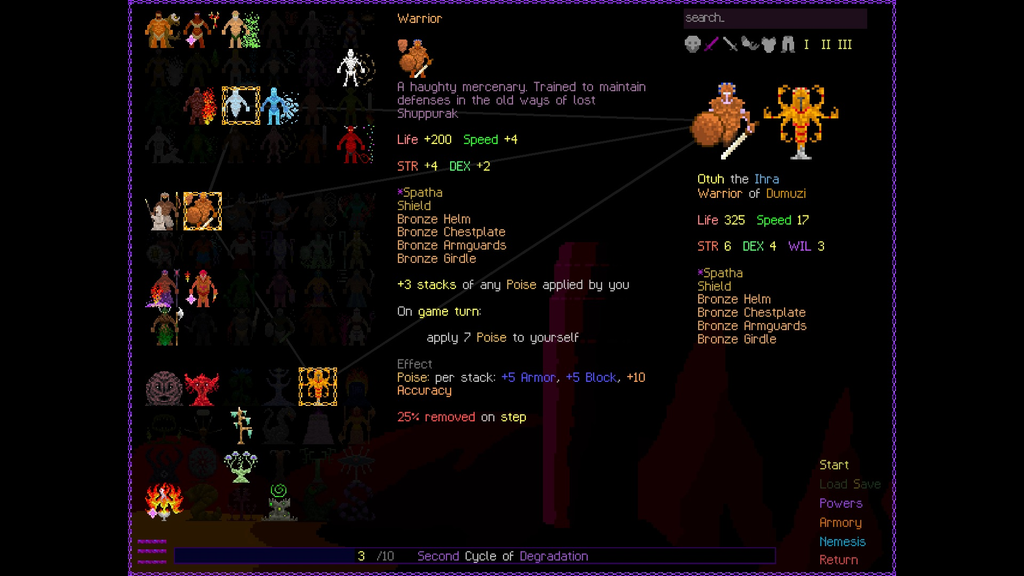
What you pick before a run starts, which influences your approach and how the run plays out. Path of Achra is built on this. Its unlocks are new races, classes and religions. So every unlock promises a different game next time. A foundation changes the impact of a modifier because the foundation can dictate the strength of modifiers. Finding a flame staff that heals you every time you deal fire damage is build defining if you’re a pyromancer. But might not be too impressive if you’re playing as a paladin.
Engine
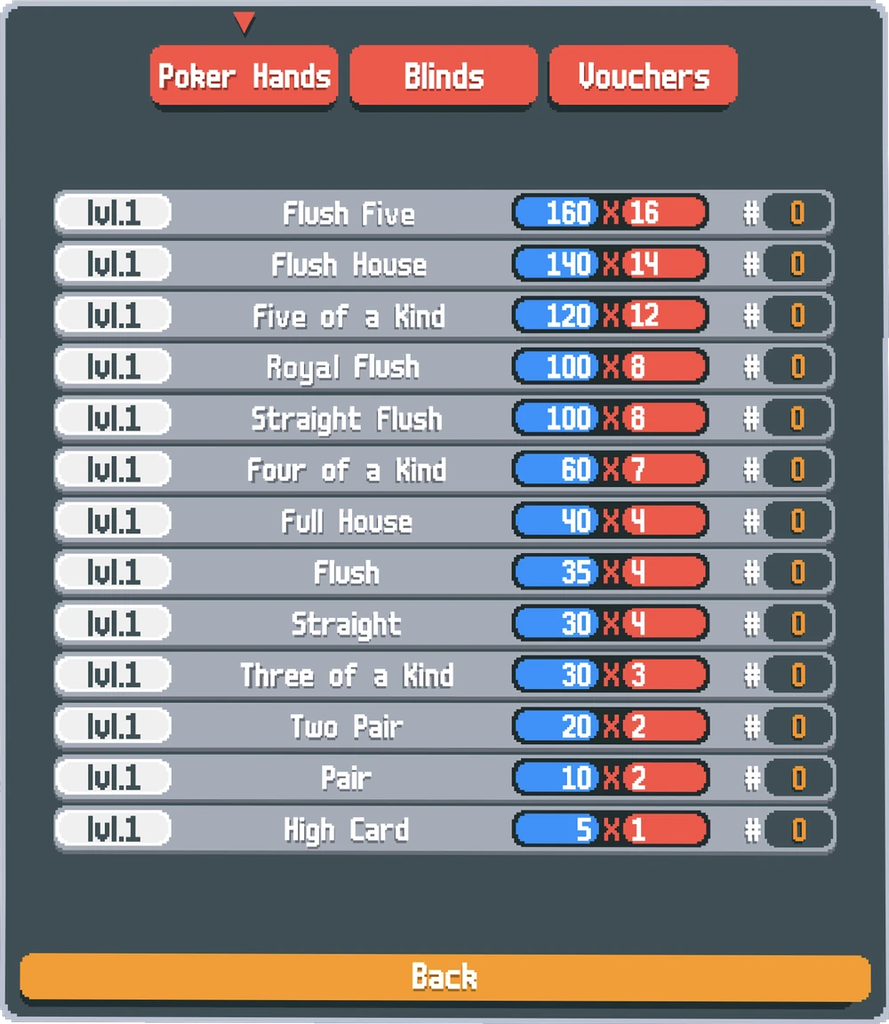
The thing that actually does the work, the thing that you point at if someone asked “What’s your build?”. In Balatro, it’s the hand(s) you play. In Halls of Torment it’s your chosen abilities. Everything else in the game exists to make the engine stronger.
Rule Benders
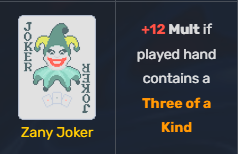
Passive stuff that changes how the rules work. Usually they come in limited slots. Jokers in Balatro are a great example. The slot limit is what makes them interesting: when the slots are full, every new one is a swap, not just increased power. Limiting the number of rule benders active at a time forces the player to get creative and find synergies that combine to give that “broken” feel.
Level ups
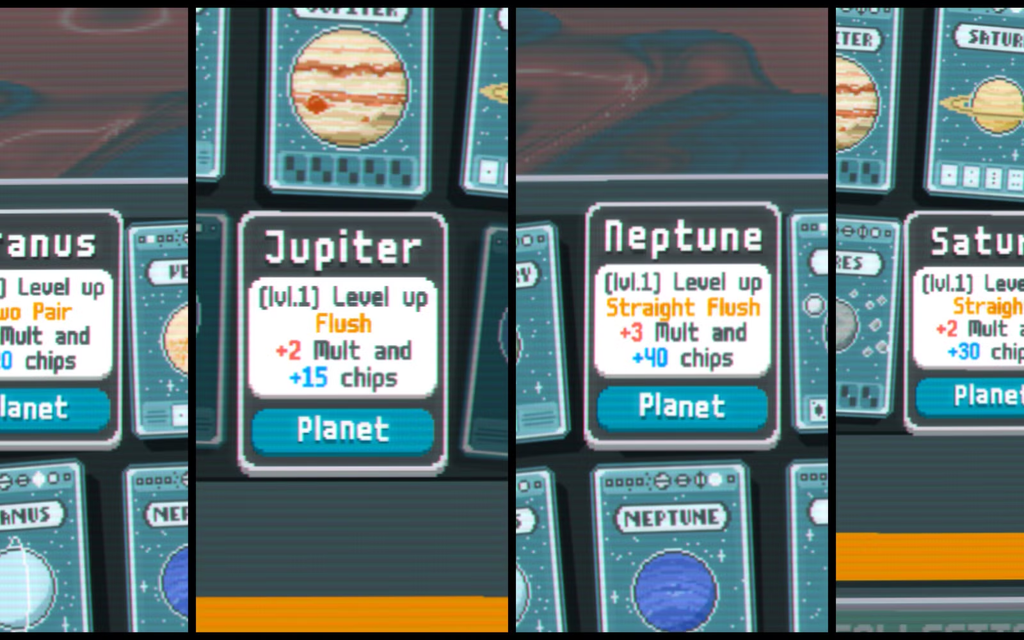
Make one thing stronger. Simple, readable and always welcome. The trick in Balatro is that planets level a hand type, not one card. Which pushes you to commit to something. It also just gives a plain numerical increase, while still giving you the choice of “which part of my engine do I spend this on?” without exhausting your other BUM types, such as rule benders. Level ups can be used as a buffer to keep the reward of rule benders fresh and still exciting.
Combos
Two things you picked for different reasons click together. Suddenly, you’re broken. You’ll also see this being called a synergy. This is the “strong genius” feeling that a lot of Roguelites capture well. Achra’s trigger chains, He is Coming’s set bonuses. Both are great examples of this. A game needs tags or categories for combos to work.
Path of Achra does this by having effects fire on specific actions, such as ‘On Stand Still’, ‘On Attack’, ‘On Killing an enemy’. Similarly, He is Coming uses item tags, such as ‘Food’, ‘Bomb’, ‘Wood’.
Using a tagging system like this lets you add tag-wide buffs, which can make useless or mid items transform into useful parts of your build.
Deals with a Catch
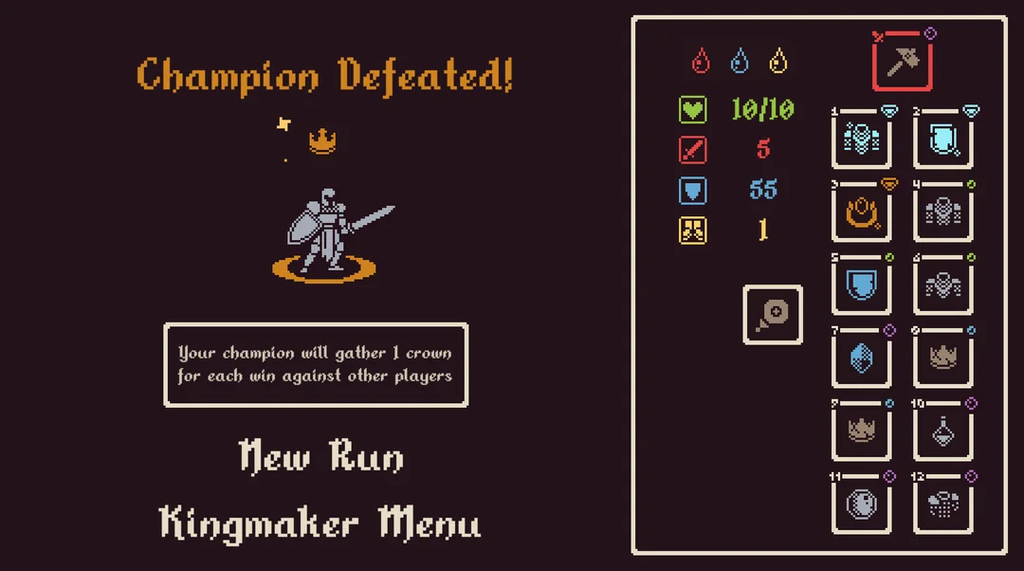
Big power with a real cost. Balatro’s spectral cards, Halls of Torment’s artifacts. These create memorable moments, because they’re choices where you can get it wrong.


Pool Control
Ways to shape what you’ll be offered. Important for locus of control. Getting this right can help if you have complaints from players who feel they’re constantly at the mercy of your rng. If you see negative feedback regarding ‘its too random’ or ‘too much heavy rng’ then pool control gives the player back some control over their direction. Rerolls, banishes, skips, removing cards. Without it, bad luck feels like the game’s fault. With it, bad luck is something you can fight back against.
The Check
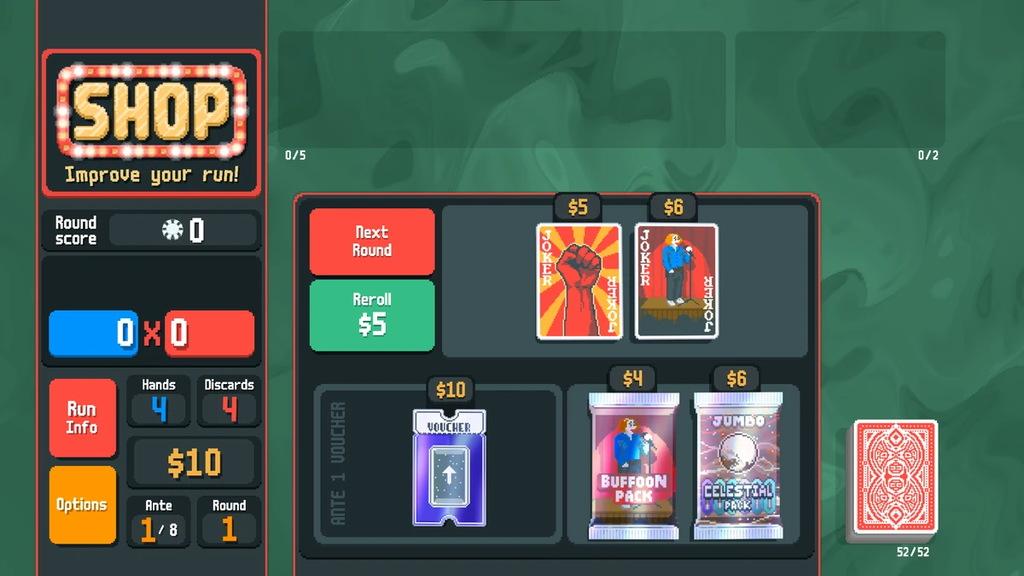
The thing that tests your build and punishes a narrow one. Balatro’s boss blinds and He Is Coming’s bosses both have a specific rule or weakness. They both show you the boss in advance so you can build for it. That’s a check you can plan around. Again, this gives locus of control to the player. They know that they have time and space to prep for what comes. Going in blind can leave them feeling at the mercy of your game again, rather than feeling that they have the tools and resources to prep and defeat it.
The Shop
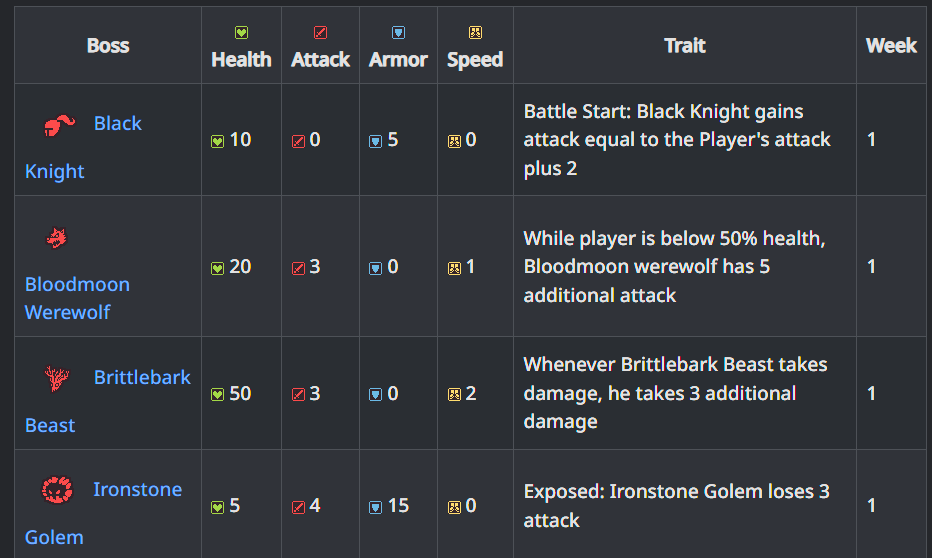
Where you spend a currency you’ve earned. Not every game has one, but they usually have an equivalent. Most have a literal shop, like Balatro. He is Coming has merchants on the map. Path of Achra, I’d argue, combines the shop and pool control on the map nodes. Similar to Slay the Spire, you pick your path based on the content and reward of nodes on the map. Achra literally shows the items you’ll receive in your bag when you clear it.
When decisions arrive
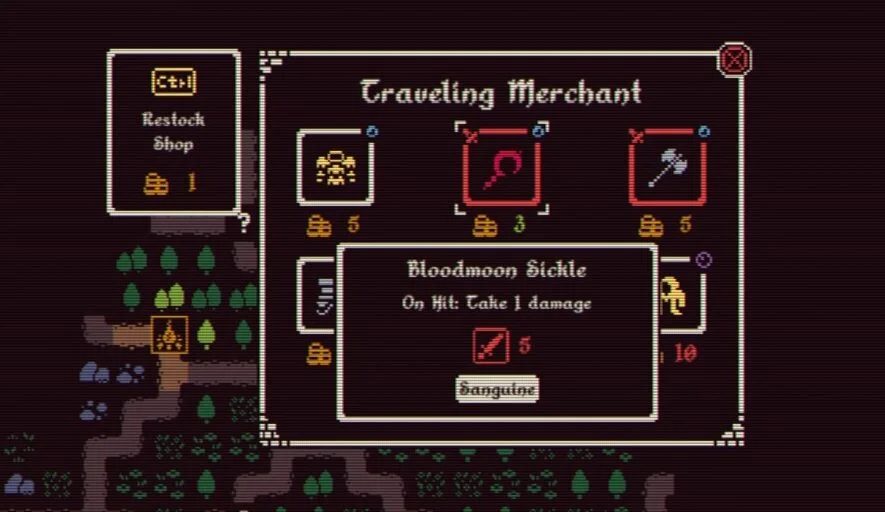
All four keep handing you choices until the end of the run. On average, you’ll get a choice every 2 mins or so until the end of the run.
If your player can go more than 4 minutes without a choice, I’d say revisit the pacing.
How often a BUM lands
| Game | How often you get a BUM |
|---|---|
| Balatro | Shop after every blind, three per ante |
| Halls of Torment | Every level up, plus scrolls and chests on the map |
| Path of Achra | Every level, plus gear drops |
| He Is Coming | Every chest and merchant you walk to, every day |
The rules that fall out of it
One system, one job
He is Coming has items, oils and sets, and you understand each one straight away. Balatro has planets, tarots, spectrals, vouchers, seals, editions and enhancements. After a few runs, you can still find yourself asking “wait, what’s this one again?”
Cover the jobs, not the types
Achra’s prayers do 2 jobs with one system. They’re an active power and a catch. Use them now, or keep them so your god saves you from death. Two jobs, zero extra things to learn.
Slots make choices
Balatro only lets you hold 5 jokers. Once you’re full, taking a new one means selling one you like. He is Coming does the same with item slots. Without the cap, you’d just take everything and there’d be no decisions.
Level the type, not the thing
In Balatro, Jupiter levels up every flush you’ll ever play, not one card. So once you’ve taken a couple, you’re a flush build. That’s the game nudging you to commit in a specific direction.
Tags make combos possible
A Balatro joker can say “hearts give +Mult” only because cards have suits. He is Coming’s set bonuses only work because an item belongs to the Redwood set. Path of Achra lets you target items that heal, cause damage or summon minions whenever you stand still. Suddenly, you’re a lich who spreads frost damage, raises minions and destroys the map by not moving.
Show the check before it hits
He is Coming shows you which boss is coming in advance. If it ignores armor, you know that stacking armor won’t help you. Balatro shows you the boss blind at the start of the ante. So when you lose, it’s because you didn’t prep. Not because the game didn’t inform you.
Keep the decisions coming
Halls of Torment hands you a pick every level up, through the full run. That’s why a 20 minute run feels fresh each time, and why it’s so hard to put down. Whereas, during my time testing out Thronefall, I felt quite content stopping halfway through. The choices were made at the start, then the rest of the game fed off of them.
The checklist
Run this on any game you’re studying, or any prototype you’re designing. One line per job.
Checklist
| Job | Ask |
|---|---|
| Foundation | What do I pick before the run, and does it change what the run is? |
| Engine | What’s the one thing doing the work? Could a player name it? |
| Rule benders | What are they, how many slots, and what happens when the slots are full? |
| Level ups | What gets levelled: one thing, or a whole type? What’s the one stat that grows? |
| Combos | What tags or categories let two things click together? How many tags? |
| Deals with a catch | Where’s the big power with a real cost? Can the player see the cost before they take it? |
| Pool control | How does a player fight bad luck? Reroll, banish, skip, remove? |
| The check | What tests the build? Can the player see it coming? |
| The shop | Where do they spend, how often, and what’s always on offer? |
| Pacing | How long can a player go without a meaningful pick? |
| Type count | How many BUM types are there? Can each one be named by its job in one line? |
Worked example: Raid Boss
This is a prototype I’m working on. I’ve reached the point where the core game is good enough to further test adding the roguelite skeleton to it. Which is part of the motivation for writing this article.
Raid Boss, job by job
| Job | Raid Boss |
|---|---|
| Foundation | Unlockable bosses that each change how you plan the dungeon |
| Engine | Boss abilities in limited slots, tagged by school (Physical, Flame, Frost, Arcane, Psychic, Summoning) and shape (single, AOE, raid wide). Mobs are the second half of the engine, tagged Orc, Undead, Feral |
| Rule benders | Loot in limited slots that talks to tags. “Heal for fire damage dealt”, “Orcs count as Undead” |
| Level ups | +1 level to an ability or a whole mob type. One stat grows per level |
| Combos | Ability order combinations, ability and mob tags affected by items (rule benders) |
| Deals with a catch | Soulbound loot: big power, guilds get a world buff, can’t be removed. Rare chance to trade it in |
| Pool control | Reroll the shop for skulls |
| The check | Last guild of each tier has a rule that tests your build. Final is the sweatiest guild, 30-man, full world buffs |
| The shop | After every raid. Three slots: ability, mob, random. Vouchers add a slot. Chests at tier end give 2 or 3 things |
| Pacing | A shop every raid, so a pick every couple of minutes |